
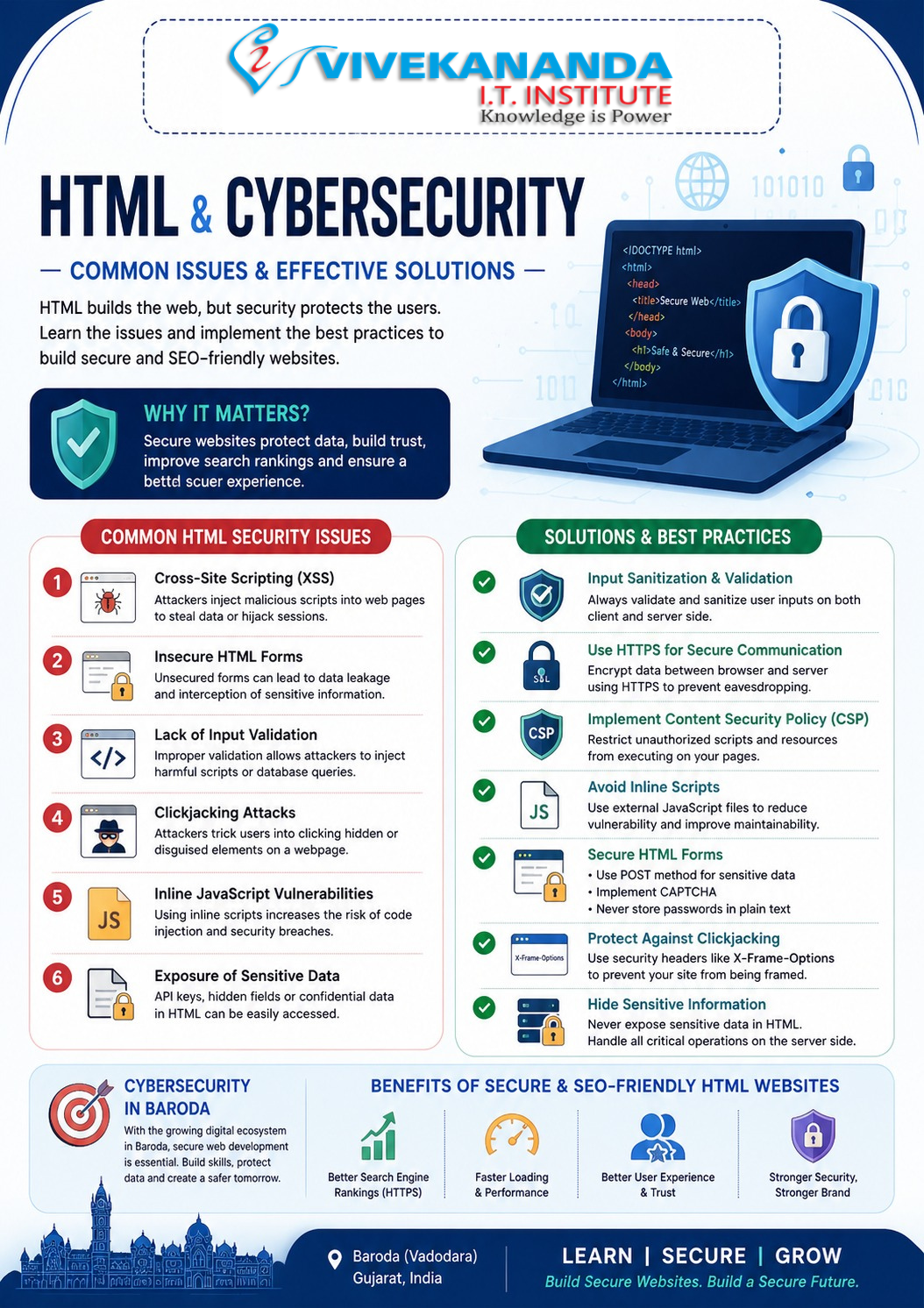
Introduction to HTML and Cybersecurity
HTML (HyperText Markup Language) forms the foundation of every website, structuring content and enabling web page display. However, without proper security practices, HTML based websites can become vulnerable to various cyber threats.
Understanding HTML security is essential for developers who want to build safe and reliable web applications. Learning how to identify vulnerabilities and apply cybersecurity best practices helps prevent data breaches and protects user information.
Common HTML Security Issues
1. Cross-Site Scripting (XSS)
Cross-Site Scripting (XSS) is one of the most common vulnerabilities in web applications. It occurs when attackers inject malicious scripts into web pages viewed by other users.
Impact:
- Theft of user data
- Session hijacking
- Unauthorized account access
2. Insecure HTML Forms
HTML forms are widely used to collect user data such as login credentials and personal information. If not properly secured, they can expose sensitive data.
Risks:
- Password leakage
- Data interception during transmission
3. Lack of Input Validation
Failing to validate user input allows attackers to insert harmful code into web applications.
Common Threats:
- Script injection
- Database manipulation attacks
4. Clickjacking Attacks
Clickjacking tricks users into clicking hidden or disguised elements on a webpage, leading to unintended actions such as unauthorized transactions or data sharing.
5. Inline JavaScript Vulnerabilities
Using inline JavaScript within HTML increases the risk of code injection attacks, making applications more vulnerable to exploitation.
6. Exposure of Sensitive Data
Sensitive information such as API keys, tokens, or hidden fields can be accessed through the HTML source if not properly secured.
Cybersecurity Solutions and Best Practices
1. Input Sanitization and Validation
Always validate and sanitize user inputs to prevent malicious code execution and injection attacks.
2. Use HTTPS for Secure Communication
Implement HTTPS to encrypt data exchanged between users and servers, ensuring privacy and data integrity.
3. Implement Content Security Policy (CSP)
CSP restricts the execution of unauthorized scripts, reducing the risk of XSS attacks.
4. Avoid Inline Scripts
Use external JavaScript files instead of inline scripts to minimize security vulnerabilities.
5. Secure HTML Forms
- Use the POST method for sensitive data
- Implement CAPTCHA to prevent bots
- Never store passwords in plain text
6. Protect Against Clickjacking
Use security headers like X-Frame-Options or Content Security Policy (frame-ancestors) to prevent your website from being embedded in malicious frames.
7. Hide Sensitive Information
Avoid exposing confidential data in HTML. Always handle sensitive operations on the server side.
Importance of Cybersecurity in Modern Web Development
With rapid digital growth, businesses increasingly rely on secure web applications. Developers must understand HTML security to protect systems from cyber threats and ensure user trust.
Cybersecurity skills are now essential for IT professionals, helping them build robust, real-world applications that can withstand modern attacks.
SEO Benefits of Secure HTML Websites
- HTTPS-enabled websites rank higher on search engines
- Clean and optimized HTML improves page speed
- Better user experience increases engagement
- Strong security builds trust and credibility
Conclusion
Combining HTML knowledge with cybersecurity best practices is crucial in today’s digital landscape. By addressing vulnerabilities such as XSS, insecure forms, and data exposure, developers can create secure, high performing, and SEO friendly websites.
Mastering these skills ensures better career opportunities and helps build safer web experiences for users worldwide.